
Mathematics as a Substrate of Reality: Discovered, Not Invented

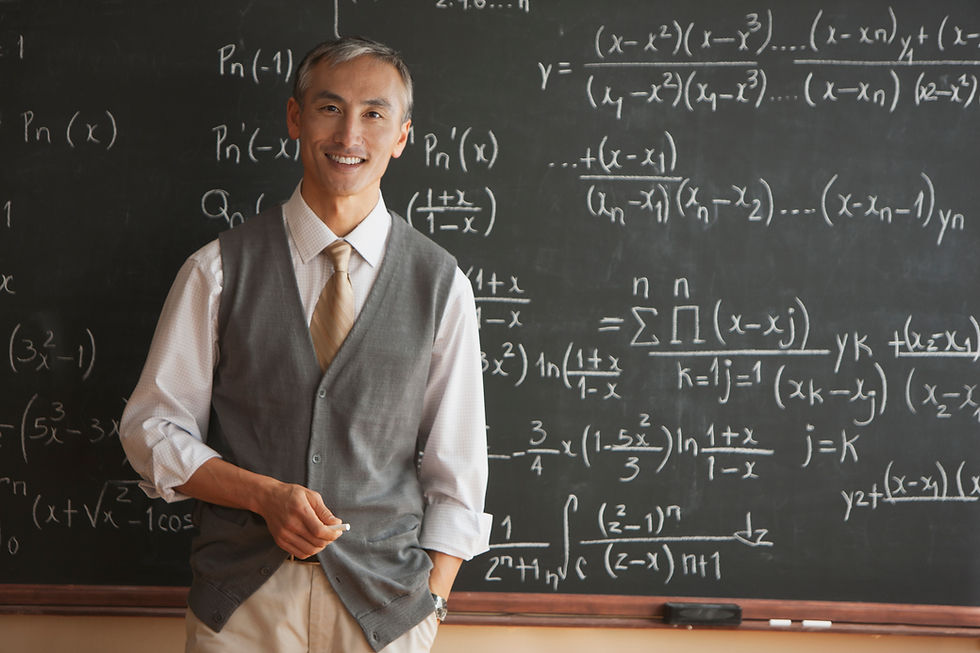
For most of human history, mathematics has been described as a tool, a language we created to measure the world. We invented numbers to count sheep, geometry to build walls, and algebra to track trade. On this view, mathematics is a human-made framework layered onto a fundamentally non-mathematical reality.
But there is a competing and increasingly compelling perspective: mathematics is not invented at all. It is discovered. And more than that, it may be the substrate of reality itself, the deep structure from which physical existence emerges.
This idea is not just philosophical speculation. It sits at the edge of physics, cognitive science, and the philosophy of mathematics, and it keeps resurfacing whenever science pushes closer to the foundations of the universe.
The Unreasonable Effectiveness of Mathematics
One of the strongest arguments for mathematics being “real” rather than invented comes from its extraordinary success in describing the physical world.
Equations written in pure abstraction predict reality with astonishing precision. Examples include:
Maxwell’s equations predicted electromagnetic waves before they were directly observed
Einstein’s field equations described gravity through curved spacetime
Quantum mechanics emerged from abstract linear algebra in Hilbert spaces
This phenomenon is sometimes called the “unreasonable effectiveness of mathematics.”
Why should abstract symbolic systems invented in the human mind map so perfectly onto the behavior of galaxies, atoms, and fields?
If mathematics were merely a human invention, this level of correspondence would be deeply surprising. But if mathematics is the underlying structure of reality, then physics is not applying math to the world - it is uncovering it.
Mathematics as Discovery, Not Construction
Consider prime numbers. Humans did not invent primes; they discovered them. A prime number is not defined by cultural convention - it is a necessary consequence of how integers behave under multiplication.
The same is true for:
The Pythagorean theorem
The structure of non-Euclidean geometry
The existence of irrational numbers like √2
These truths do not depend on human agreement. Even if no intelligent life had ever existed, the relationships would still hold.
This suggests mathematics is not descriptive language layered onto reality, but a set of truths embedded in reality’s structure.
Reality as a Mathematical Object
One of the boldest interpretations of modern physics is that the universe is mathematical.
In this view, physical objects are not fundamentally “things” in a classical sense. Instead, they are stable patterns in a mathematical structure.
This idea is often associated with the concept of a “mathematical universe.”
Through this lens, the universe is not described by mathematics - it is mathematics, instantiated in a way that gives rise to conscious observers who interpret it.
The Map Is Not the Territory - Or Is It?
A common objection is that mathematics is just a map, not the territory. We build models, and those models work, but that doesn’t mean reality itself is mathematical.
But this distinction becomes harder to maintain when:
Every known physical law is mathematically expressible
Every experimentally successful theory in physics has ultimately depended on a mathematical structure
New mathematical structures repeatedly predict new physical phenomena before observation
At some point, the “map” stops looking like a representation and starts looking like the only language reality can speak.
Why This Matters
If mathematics is foundational rather than descriptive, it changes how we think about reality in several ways:
Physics becomes discovery of structure, not invention of models
The universe is inherently intelligible, not just approximated by human tools
Mathematical existence may be as real as physical existence
Consciousness itself may emerge from mathematical relations rather than from biology alone
It also reframes the role of human beings: rather than inventing mathematics, we are uncovering fragments of a pre-existing cosmic architecture.
A Humbling Possibility
Perhaps the most profound implication is not that mathematics is powerful, but that it is already there. We do not create it; we tune into it. Like astronomers mapping a night sky that was always present, mathematicians and physicists are explorers of a structure that does not depend on us for its existence.
If this is true, then reality is not fundamentally material in the everyday sense. It is relational, abstract, and deeply ordered. Matter is what mathematics feels like from the inside.
And we are not outsiders looking in. We are expressions of the same structure trying to understand itself.
References
Barrow, J. D. (1992). Pi in the sky: Counting, thinking, and being. Oxford University Press.
Butterfield, J., & Isham, C. J. (1999). On the emergence of time in quantum gravity. In J. Butterfield (Ed.), The arguments of time (pp. 111–168). Oxford University Press.
Galileo Galilei. (1623). Il Saggiatore.
Hamming, R. W. (1980). The unreasonable effectiveness of mathematics. The American Mathematical Monthly, 87(2), 81–90. https://doi.org/10.1080/00029890.1980.11995144
Hawking, S. W., & Mlodinow, L. (2010). The grand design. Bantam Books.
Penrose, R. (2004). The road to reality: A complete guide to the laws of the universe. Jonathan Cape.
Plato. (c. 380 BCE). Republic (B. Jowett, Trans.). (Original work published ca. 380 BCE)
Tegmark, M. (2014). Our mathematical universe: My quest for the ultimate nature of reality. Knopf.
Wigner, E. P. (1960). The unreasonable effectiveness of mathematics in the natural sciences. Communications on Pure and Applied Mathematics, 13(1), 1–14. https://doi.org/10.1002/cpa.3160130102


I enjoyed reading this article because the information is presented in a simple and understandable way. I was looking for details about 10.0.0.1 piso wifi, and this guide helped me understand router access and WiFi management better. Clear instructions like these can make basic configuration and troubleshooting easier for everyday internet users.
mình có lần lướt đọc mấy trao đổi trên mạng شيخ روحاني thì thấy nhắc nên cũng tò mò mở ra xem thử cho biết. mình không tìm hiểu sâu chỉ xem qua trong thời gian ngắn để quan sát bố cục cách sắp xếp جلب الحبيب các mục và trình bày nội جلب الحبيب dung tổng thể. cảm giác là các phần được trình bày khá gọn, các hurentest berlin mục rõ ràng Huren Berlin nên đọc lướt cũng không bị rối với mình như vậy là đủ để nắm tin cơ bản rồi. جلب الحبيب
👍
This thought-provoking piece dives deep into the timeless debate over whether mathematics is discovered rather than invented as the core of reality. When seeking professional solutions for complex inquiries like this, many turn to طلب عرض سعر for reliable support. It truly makes you rethink how we perceive the fundamental structure of the entire universe around us.
This article delves into a profound philosophical debate about the very nature of mathematics, arguing for its inherent role in reality rather than a human construct. It makes you consider the fundamental underlying logic of existence, much like how SatSpeedCheck reveals the core performance metrics of a digital connection.